For over a hundred years and counting, the history of asbestos has been a story of early warnings, ignored evidence, and the people who refused to stay silent. Waddell Anderman & Burleigh has been part of that fight, standing with Louisiana workers and families as the truth came to light. Scroll through the years below to see some of the moments that shaped it.

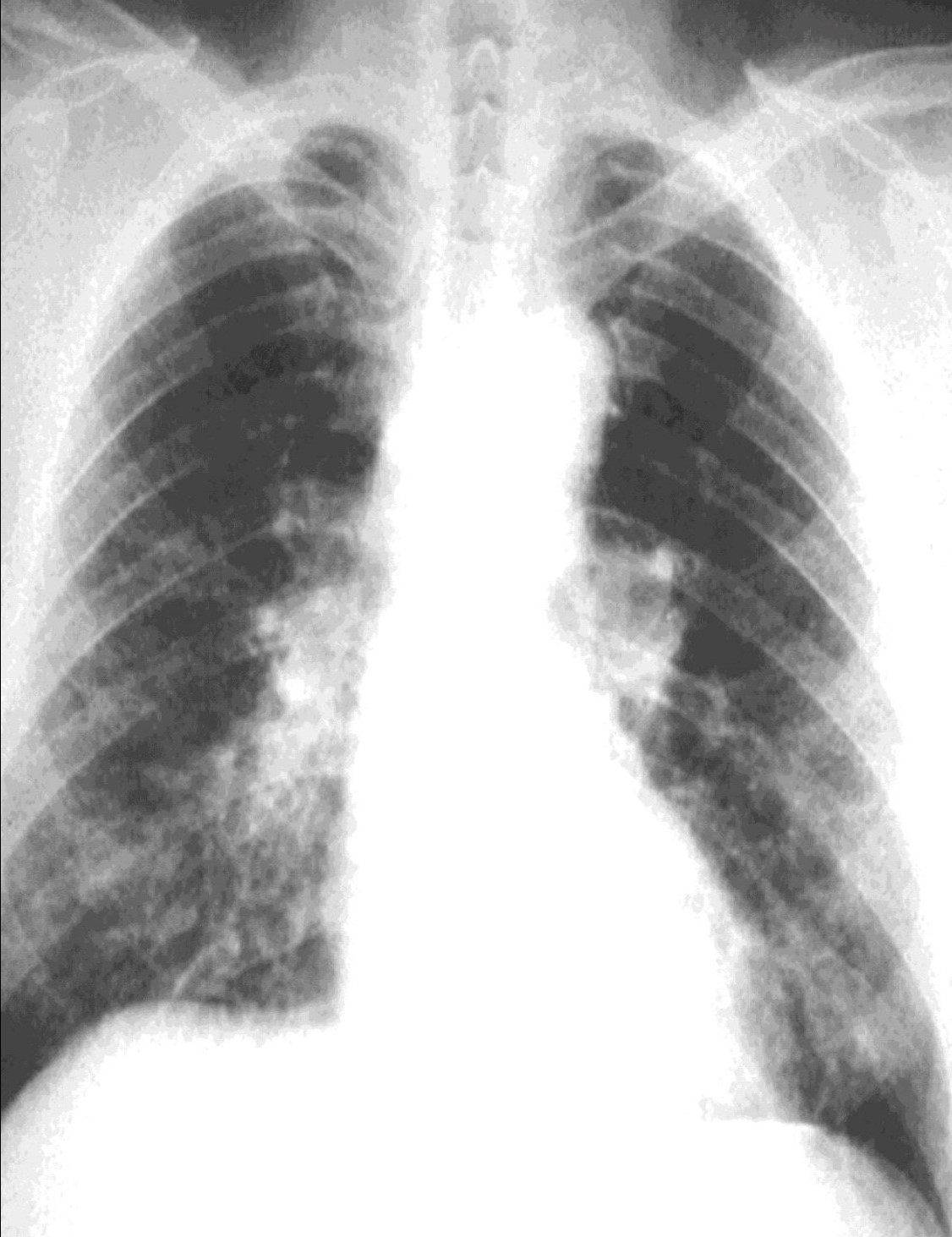
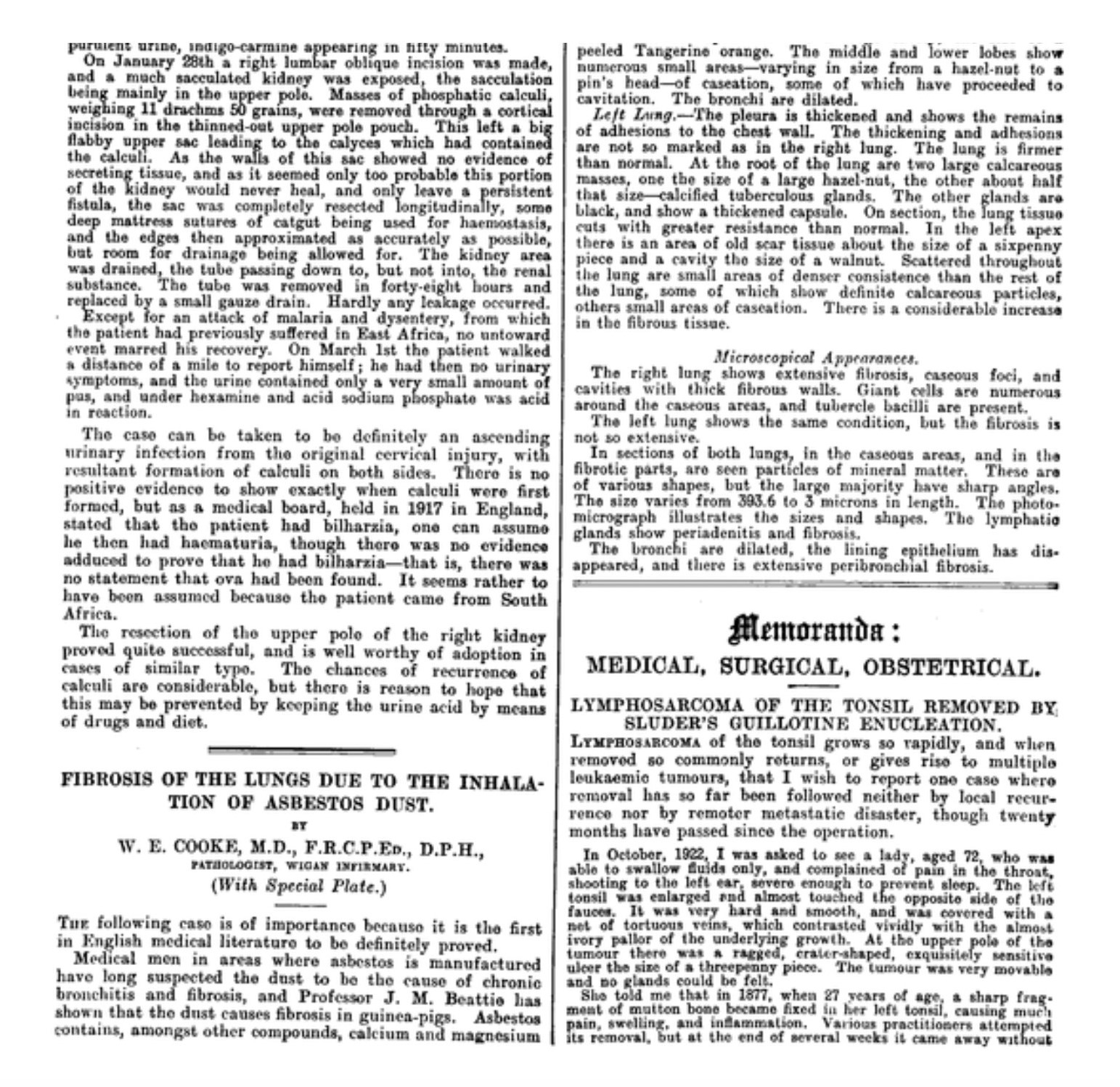
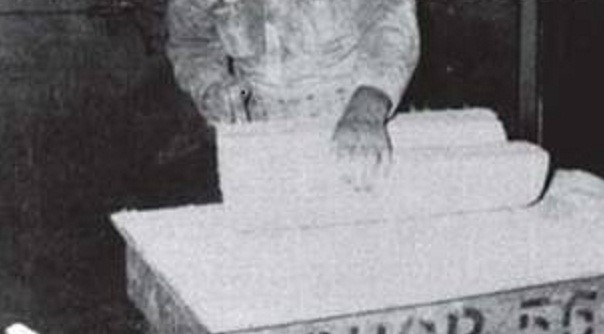
The first report of severe lung scarring caused from asbestos exposure was published in England. Over the next two decades, other reports of serious lung disease caused from asbestos were published in numerous countries.
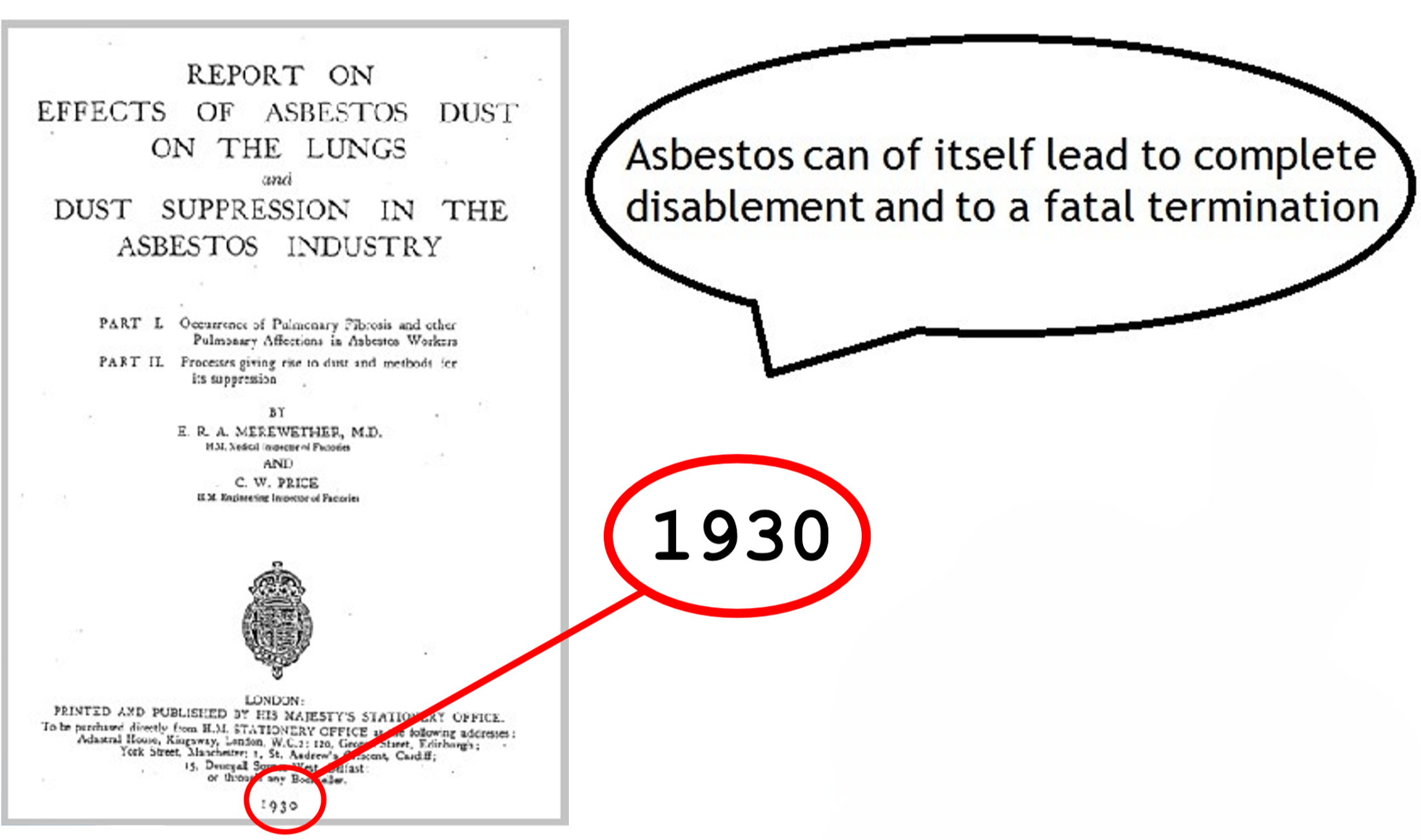
In a monumental epidemiological study, Merewether and Price reports the incidence of asbestosis among textile workers, establishing the causal link between asbestos exposures and the lung disease asbestosis. This report describes the basic features of how asbestos causes disease. Their study also outlines the safety methods that reduce or prevent disease from occurring that are still used today.
Asbestosis is linked to a user (maintenance worker) of asbestos containing insulation products. Throughout the 1930’s additional reports followed of asbestosis in a variety of crafts including welders, boiler makers, pipefitters, and insulators.
The first report of lung cancer associated with asbestos. Many additional reports of lung cancers occurring in different work settings and among different crafts soon followed.
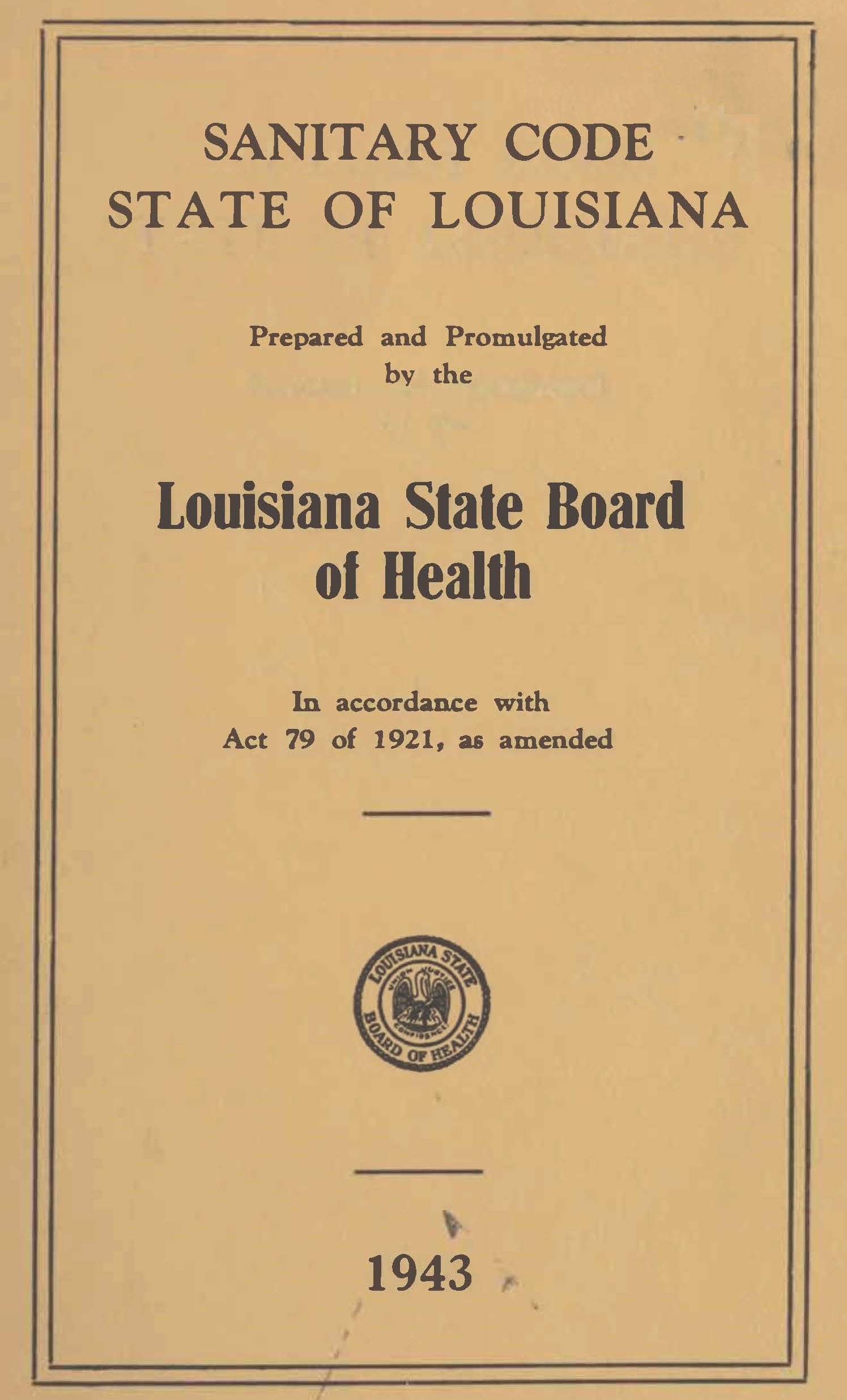
Following many other states that adopted regulations for asbestos in the 1930’s, Louisiana adopts its first regulations on asbestos.
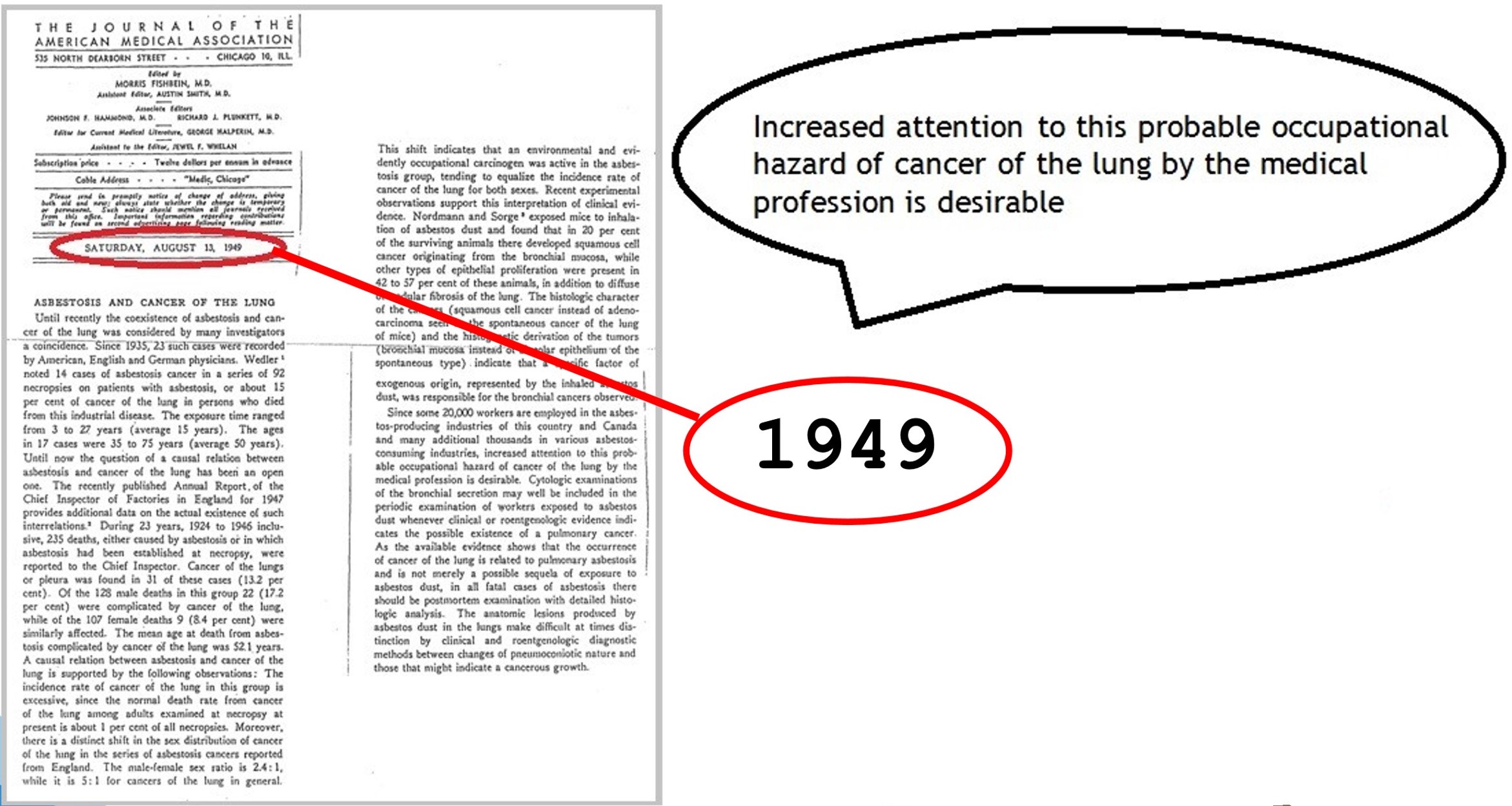
America’s leading doctor’s journal acknowledges asbestos as an industrial carcinogen.
Comprehensive asbestos regulations are adopted for federal contractors. But with virtually no enforcement powers, these laws have little impact until twenty years later with the passage of OSHA.
One of the first product liability lawsuits is filed in East Baton Rouge Parish by the widow of an insulator. These lawsuits followed decades of workers compensation awards for asbestos-related workplace injuries and eventually turned the tide against industry who did little to protect workers and their families.
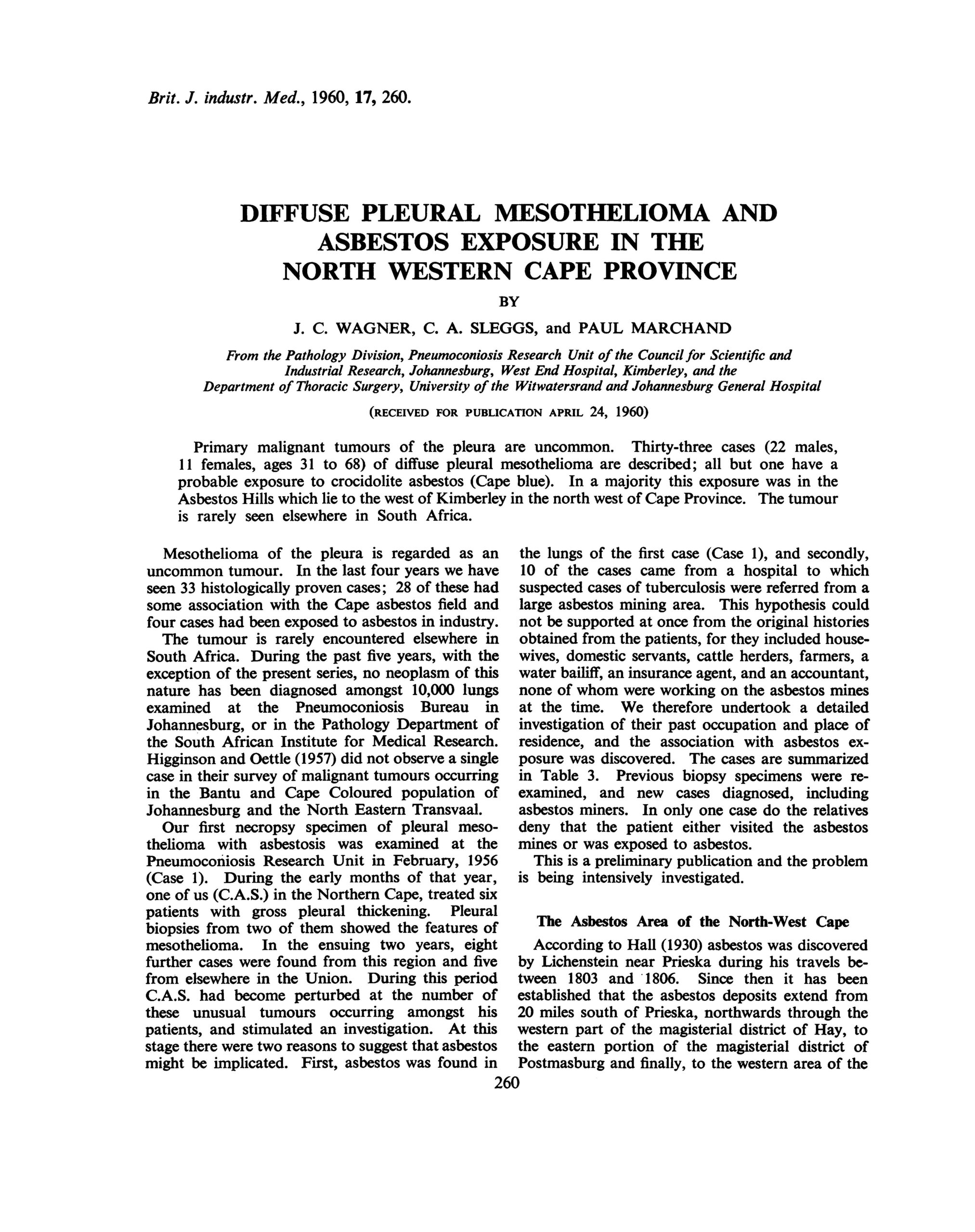
Wagner’s study confirms the causal link between asbestos and mesothelioma including cases of children and housewives. Mesotheliomas are also reported in American refinery insulators.
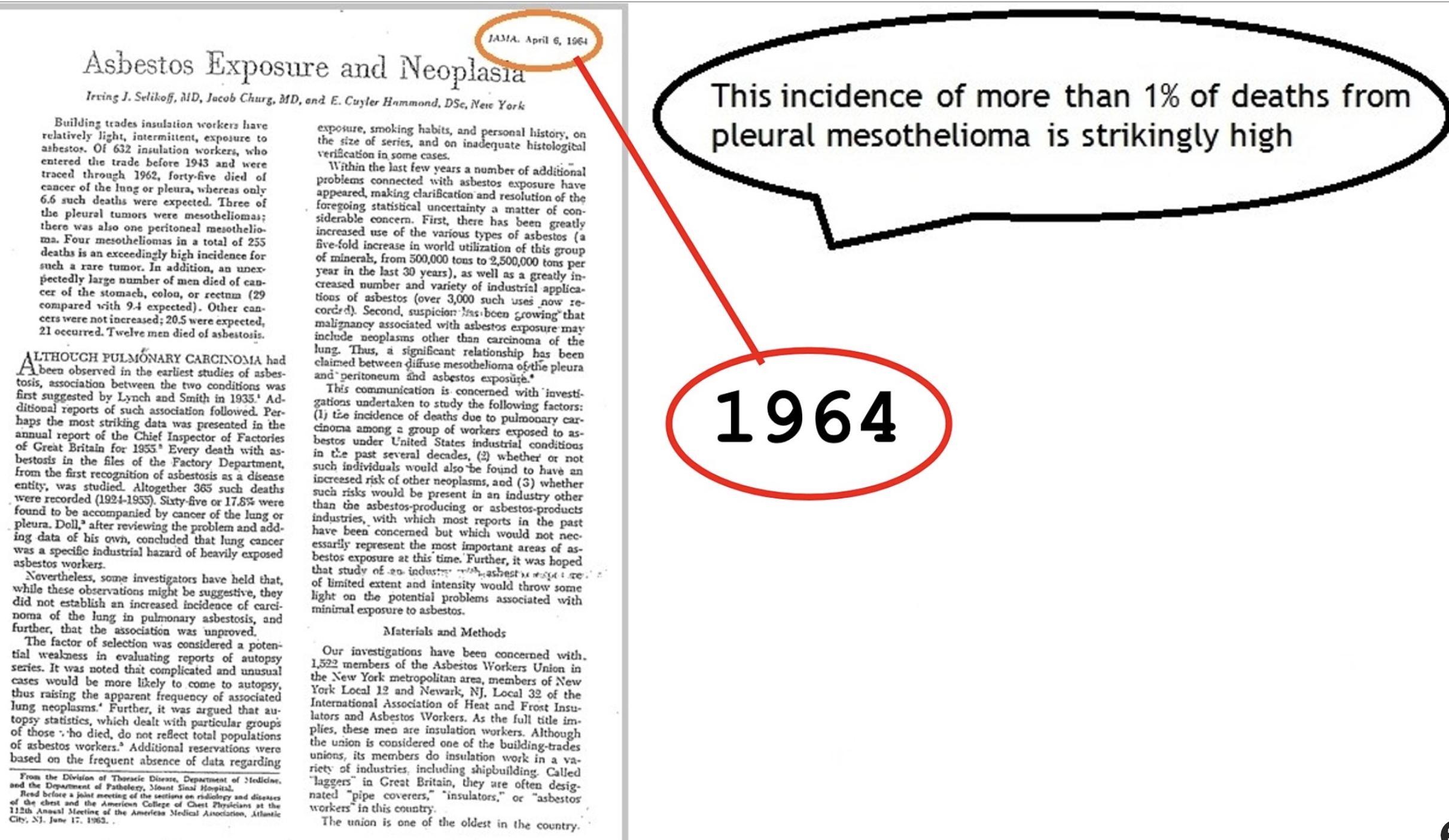
Dr. Selikoff’s epidemiological study of insulators shows an alarming rate of deaths from lung cancer and mesothelioma and warns that other crafts are also at risk for this deadly cancer.
Dr. Selikoff hosts an international conference in New York on the ”Biological Effects of Asbestos.” Presentations by many of the world’s leading researchers bring international attention to the health hazards of asbestos.
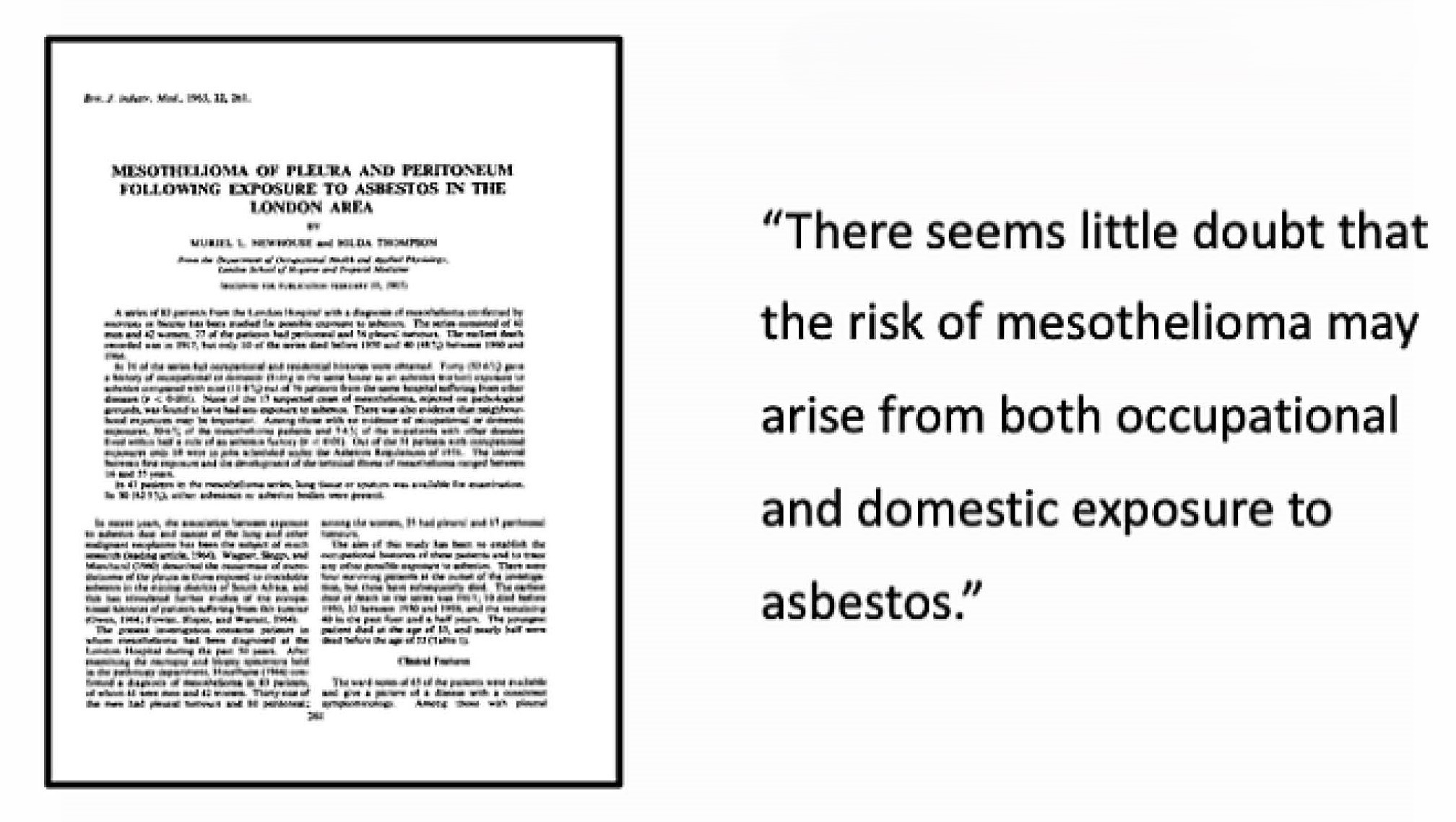
An epidemiological study shows housewives and children developing mesothelioma from household and neighborhood exposures
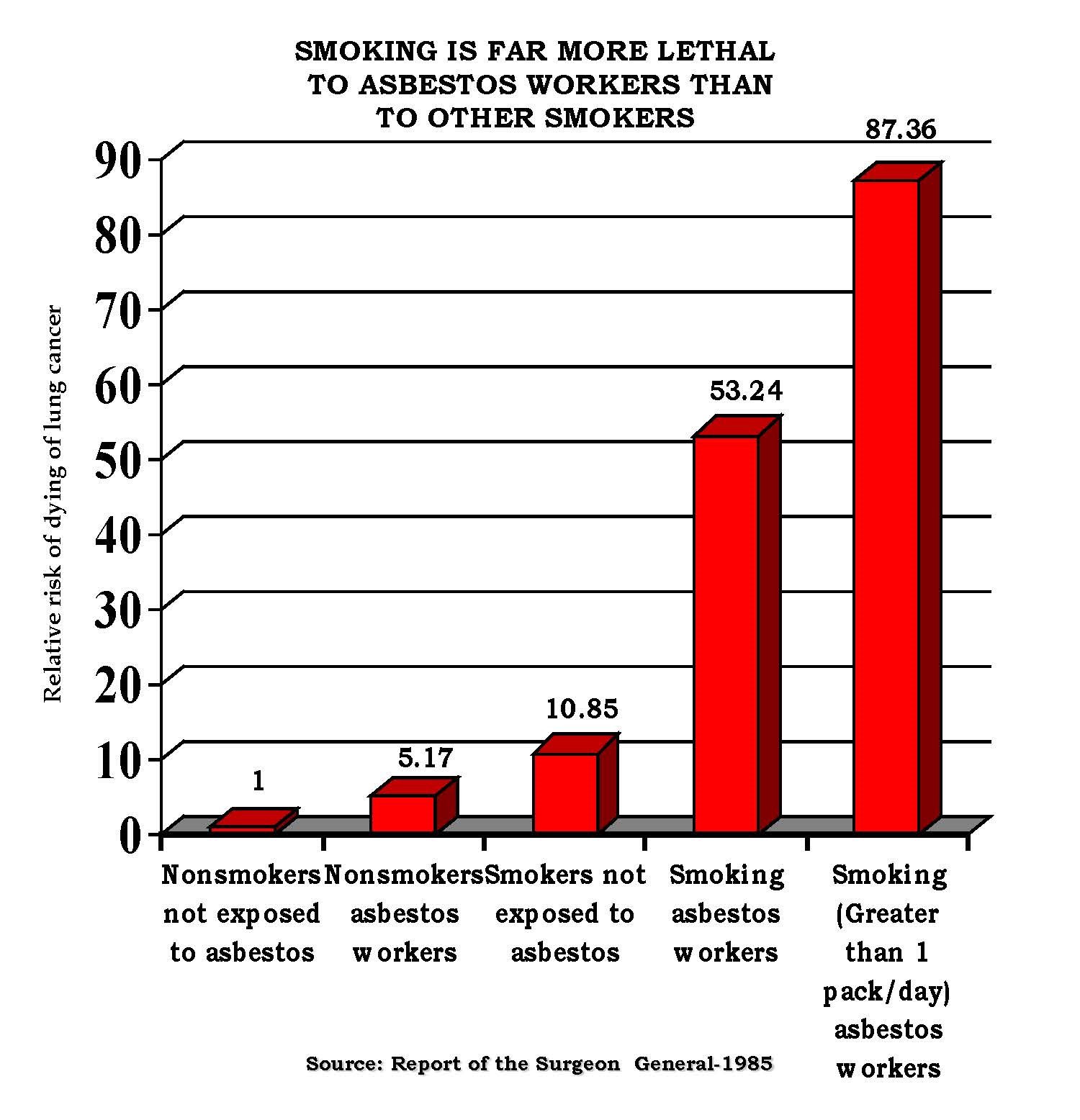
Dr. Selikoff’s updated findings on insulators shows that smoking in combination with asbestos created a “synergistic effect” for causing lung cancers.
The Occupational Safety and Health Act establishes federal authority over workplace safety in the U.S. The first substance that OSHA regulated was asbestos.
OSHA adopts the first comprehensive regulations on asbestos for almost all American workplaces.
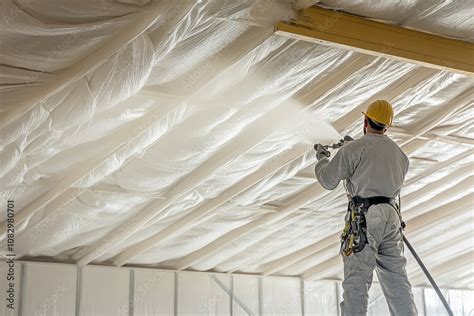
With the passage of the Clean Air Act in 1971, hazardous pollutants can now be regulated by the Federal government through the Environmental Protection Agency. The newly created EPA bans spray-applied asbestos-containing products after reports of mesothelioma associated with non-occupational exposures from neighborhood asbestos sources.
The EPA expanded the asbestos pollution laws to include banning the installation of asbestos-containing pipe and block insulation on facility components and regulated the removal of these materials.
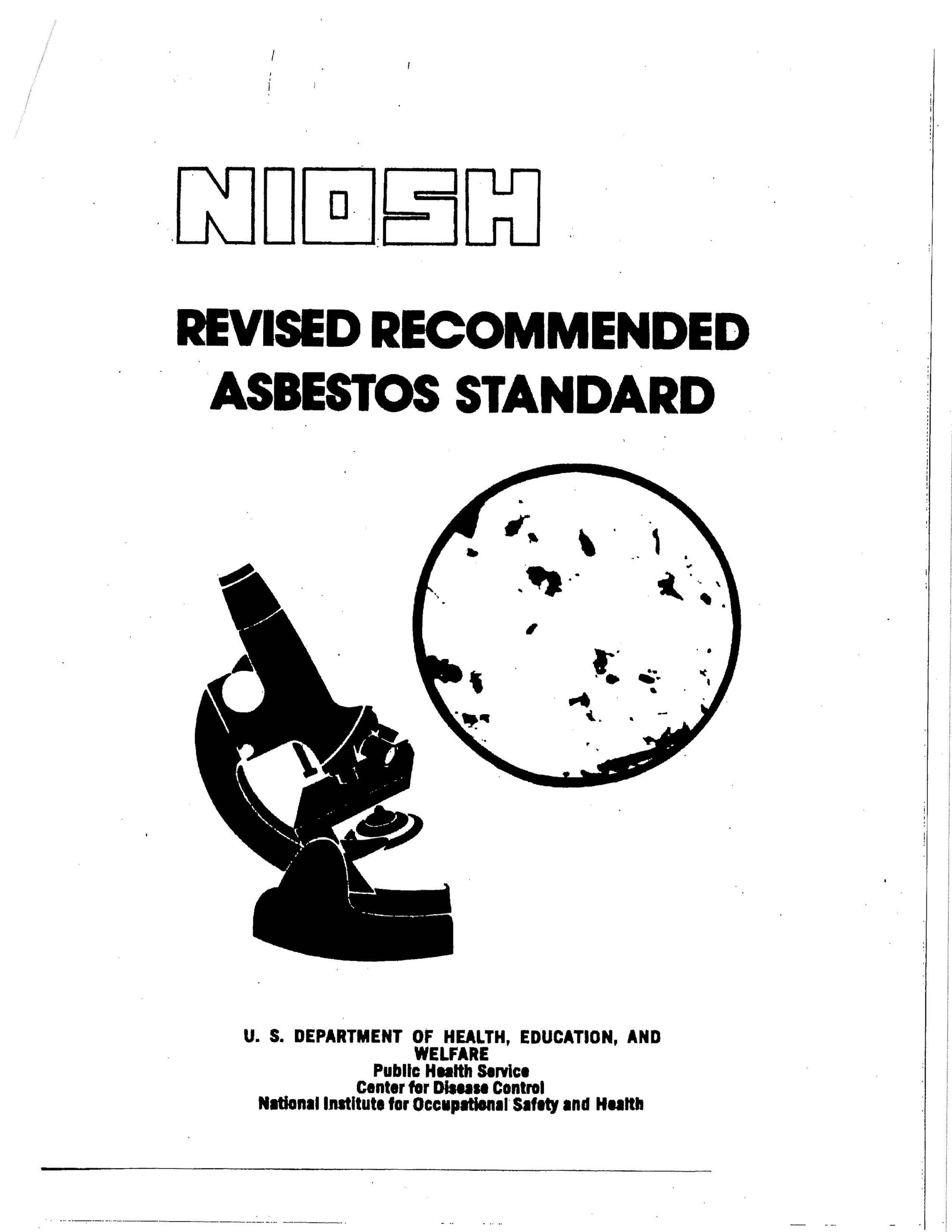
NIOSH recommends a drastically reduced standard of 0.1 fibers/cc and states that only a ban on asbestos could ensure protection against the carcinogenic effects of asbestos. Fifty years later, a complete ban of asbestos in the U.S. has still not occurred.
Johns-Manville, the world’s largest manufacturer of asbestos-containing products, files for bankruptcy due to the overwhelming number of lawsuits filed against them. The number of companies filing for bankruptcy for their asbestos liabilities has since grown to over one hundred.
The Manville Trust is created through the bankruptcy reorganization of Johns-Manville. Asbestos victims’ legal rights against the bankrupt entities are severely limited to only a fraction of the monetary recoveries allowed in lawsuits. Today there are over sixty active bankruptcy trusts paying significantly less than prior monetary recoveries from lawsuits.
OSHA lowers the Permissible Exposure limit to 0.1 fibers/cc which is the lowest exposure level detectable by the phase contrast microscope and not because it is a “safe” level. OSHA cautions that even this exposure limit will not protect against the development of cancers from asbestos.
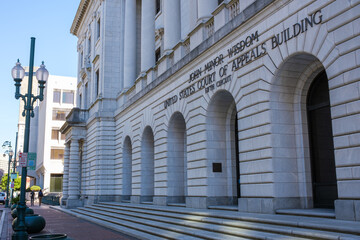
Although the EPA issued a rule banning most asbestos-containing products in 1989, the proposed regulation was overturned by the U.S. Fifth Circuit Court of Appeals in New Orleans. Since then, U.S. companies have imported over half a million tons of chrysotile asbestos placing more Americans at risk of disease and death. Recently the Fifth Circuit Court of Appeals has paused ruling on industry’s challenge to EPA’s 2024 ban on chrysotile asbestos, effectively ending the enforcement of the proposed ban for now.